Website Design & Development
Websites built to load fast and actually convert.
Mobile-first, accessible, Core Web Vitals-ready from day one - not a template with your logo pasted on it.
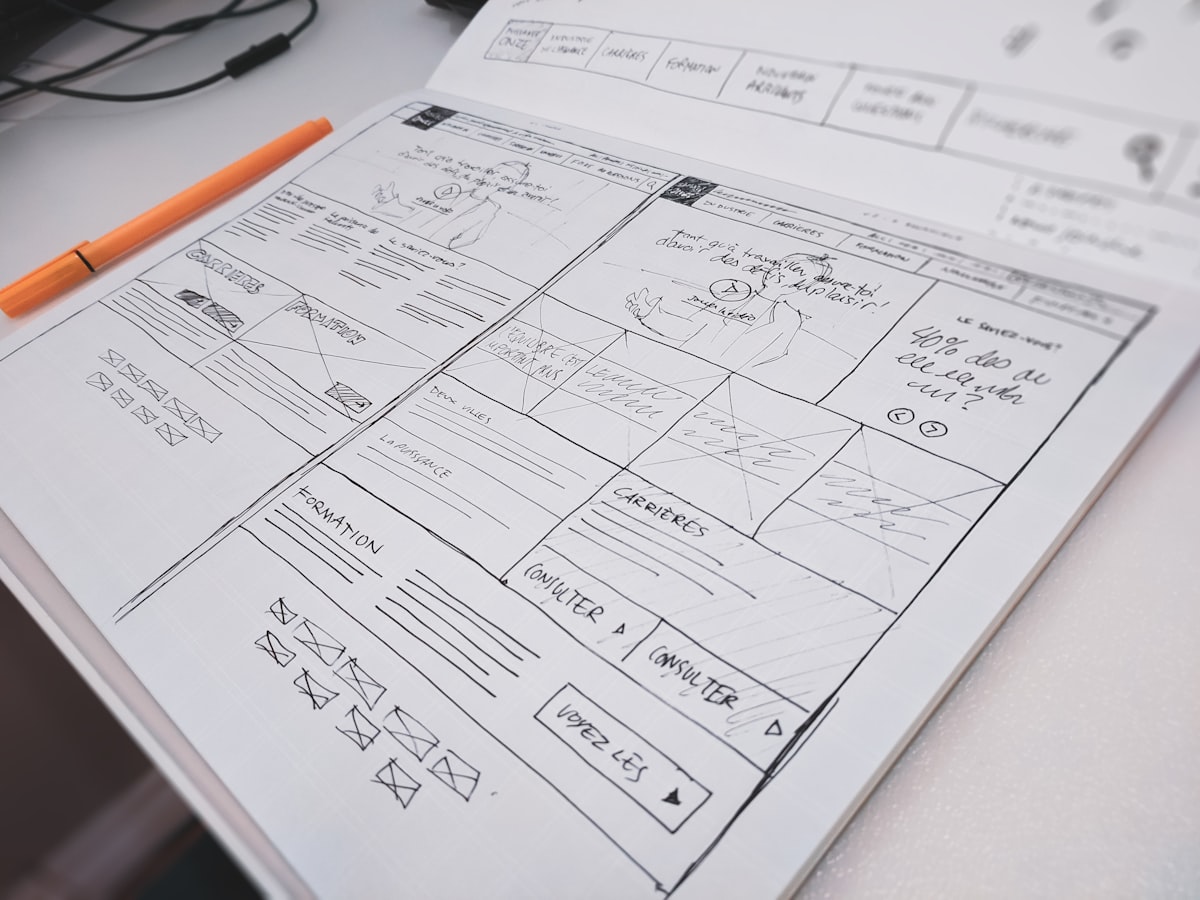
Mobile-first, accessible, Core Web Vitals-ready from day one - not a template with your logo pasted on it.
Google indexes the mobile version of your site as the version that decides your rankings, and the majority of visitors now arrive on a phone first. That means Core Web Vitals, accessibility and clean code aren't finishing touches you add later - they're constraints we design around from the first wireframe. A site that looks good in a screenshot but loads slowly or breaks on a phone isn't a finished website, it's an unfinished one.
Speed isn't a nice-to-have metric buried in a developer's dashboard - it's directly tied to whether people buy from you. For a business doing meaningful revenue online, a slow load compounds every single day the site stays that way.
Core Web Vitals make this measurable rather than a vague feeling. Sites that pass all three Core Web Vitals metrics see meaningfully lower bounce rates than sites that fail them, and real-world case studies have shown double-digit revenue-per-visitor gains once load times came down. Mobile is where this bites hardest in India specifically, since mobile now accounts for the majority of ecommerce and browsing traffic, while mobile Core Web Vitals pass rates still lag well behind desktop across the web.

Screenshots look great, but visitors bounce before the page finishes loading, and you've never checked why.
Every small content update means emailing a developer and waiting days for something that should take minutes.
Mobile visitors get a squeezed-down version of the desktop site, not something actually designed for a phone.
No one on your team can tell you your current LCP, INP or CLS scores, because nobody's looked since launch.
If two or more of these sound familiar, the site isn't a finished asset anymore - it's quietly costing you visitors and revenue every day it stays this way.
Not a generic package - each piece below is scoped to what your site actually needs. See how that scoping works just below.
Built for the phone screen first, desktop second - matching how Google actually indexes your site.
LCP under 2.5s, INP under 200ms, CLS under 0.1 - targeted from the first wireframe, not patched later.
4.5:1 contrast, full keyboard navigation and descriptive alt text, tested with real screen readers.
Hand-structured HTML instead of bloated page-builder markup that slows crawlers and browsers down.
Tested on real phone, tablet and desktop breakpoints, not just a browser window resize.
HTTPS, secure forms and hosting hardened against the exploits small business sites get hit by most.
Clean URLs, schema markup and heading structure baked in, feeding straight into on-page SEO.
A control panel your team can actually use, without calling us for every text change.
This describes the difference in deliverables, not price - we quote after understanding your actual situation, not off a rate card.
"Fast" and "well-structured" aren't things we bolt on at the end. They're decisions made at every stage.
Pages aren't padded with sections nobody needed, before a single pixel is designed.
Built first, since that's the version Google actually indexes and most visitors see first.
Every image pre-planned for compression and every font choice checked against load-time impact.
Not a page-builder's generated markup, which routinely ships far more code than a page actually needs.
Measured throughout build using Lighthouse and PageSpeed Insights, not just once at the end when it's expensive to fix.
Contrast, keyboard navigation and screen reader behaviour checked before launch, not treated as an afterthought.
Actual phones tested, since emulators miss real-world network and rendering quirks a resized browser window won't catch.

Right after launch you should see clean scores in Google Search Console and PageSpeed Insights - the leading indicator we check first, because it predicts everything downstream.
Search visibility for a brand-new site typically starts moving over this window as Google crawls and indexes properly, since technical fixes take a crawl cycle to register, not a page refresh.
A business coming from a genuinely broken old site feels the difference within days; a business already on a reasonably fast site sees a smaller, slower-building lift.
We track load time, Core Web Vitals pass/fail status and bounce rate as the leading indicators, alongside your existing analytics, rather than promising a specific revenue number upfront.
We'll review it against this exact list, free, and tell you honestly what's worth fixing.
Get a Free Website ReviewAsk us to run a free Core Web Vitals check on WhatsApp - takes minutes, no obligation.
Talk To Us On WhatsApp
We map your pages, content and goals before a single pixel is designed.
Visual design built for the phone screen first, then scaled up to desktop.
Clean code, Core Web Vitals checks and real screen-reader testing before launch.
Redirects mapped, content migrated, and your team trained on the CMS.
A typical business website takes 4-6 weeks from wireframe to launch, depending on page count and how much content needs writing versus just placing. Ecommerce and highly custom builds take longer - we give a real timeline after scoping your actual site.
Depends on your needs. WordPress fits most content-driven sites well. For simpler marketing sites or where a non-technical team wants easy visual editing, we sometimes recommend Webflow or a lightweight custom build instead. We recommend based on your situation, not our convenience.
If done correctly, yes. We map every existing URL to its new equivalent, set up 301 redirects, and preserve content that's already ranking rather than starting from a blank page.
No. Every site ships with a content management system your team can use to edit text, swap images and add pages without touching code. We also provide training so you're not guessing.
Google indexes the mobile version of your site as the primary version that determines your rankings, and the majority of web traffic now arrives on phones. Mobile-first means we design for that screen first, then scale up to desktop, instead of shrinking a desktop design down.
Yes, for two reasons. WCAG 2.2 AA compliance is now a legal requirement in several markets, and the same fixes - clear contrast, keyboard navigation, readable text - improve usability for every visitor, not just those using assistive technology.
Pricing depends on page count, custom functionality and content needs - a five-page brochure site costs very differently to a custom-built platform. We quote after understanding your actual goals, not from a fixed package list.
Often, yes. We audit what you already have first - if the foundation is solid, we redesign around it and preserve your rankings and content. A full rebuild is only recommended when the existing site has problems a redesign genuinely can't fix.
Custom WordPress theme development and WooCommerce builds - without the plugin bloat that slows most WordPress sites down.
Learn more →Content management built around how your team actually works - update text, images and pages yourself, without a developer on call.
Learn more →Online stores built for how Indians actually pay and shop - UPI, Razorpay and mobile-first checkout that fixes where stores lose the most customers.
Learn more →We'll check your Core Web Vitals, mobile experience and accessibility - no pressure, no locked-in contracts.